Trying a trade before choosing a path
31 March, 2026
Trades Primer students at Ara explore different trades before committing to a pathway
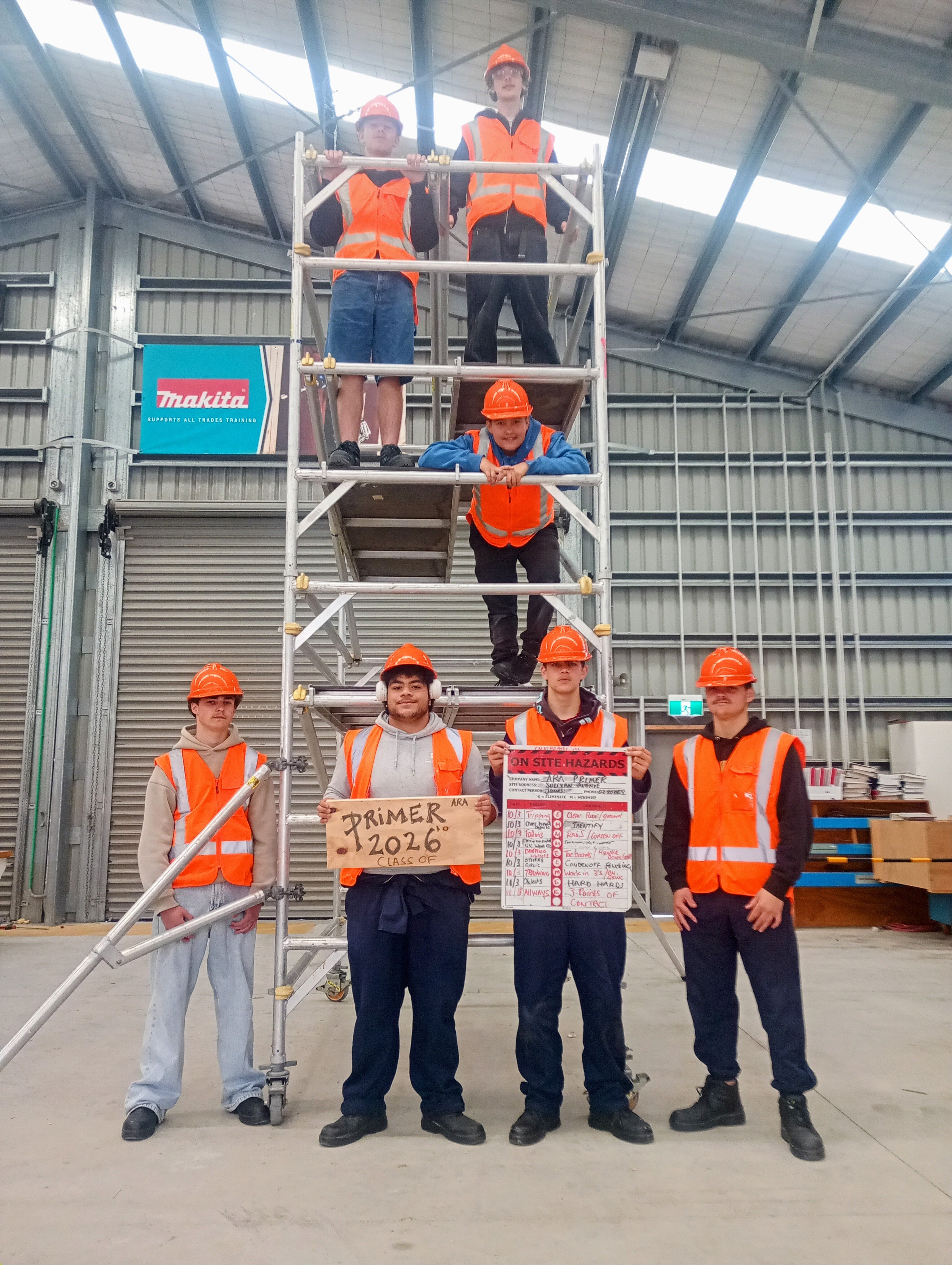
Left to right: Liam Linn, Corban Le Beau-Kennedy, Pheonix Pari Humm, Te Maahia Nopera, James Chamberlain, Charlie Harcourt.
For many young people, the hardest part isn’t learning a trade. It’s figuring out which one is right for them.
Ara’s free Trades Primer programme gives learners the chance to explore a range of trades before committing to a pathway. Over 17 weeks, students rotate through areas such as carpentry construction, automotive and engineering trades, learning practical skills while also building confidence in literacy, numeracy and communication.
For some of the learners, Trades Primer offers a chance to reset. A few have recently finished school, while others left earlier and are now discovering that learning by doing suits them better.
In the joinery workshop at Ara, a group of Trades Primer students recently completed their latest project: wooden tool chests, each designed and built by hand.
Lined up on the benches, no two were the same. They had different handles, lids or joinery choices. Each reflected the personality and creativity of the student who made it.
For many in the group, it was their first time building something like this.
“It’s really good working with my hands,” said Liam Linn. “You start with just pieces of wood and end up with something you actually made.”
Alongside learning how to safely use the equipment in the workshop, students also learn how to plan their projects and work through the steps needed to build them.
Tutor James Chamberlain guides learners through the process, using a workbook that helps them learn each piece of machinery before applying those skills to a project of their own design.
“They plan what they want to build, work out the sequence, and then make it,” he said. “Sometimes things go wrong, and that’s part of the learning, too.”
Students also learn how to cost their projects, calculating the materials and thinking about what they would need to charge if they were making something for someone else.
“We worked out what everything would cost,” Corban Le Beau-Kennedy explained. “So you know what you’d have to charge if you were making something like this.”
Portfolio Manager – Construction Trades Mandy Gould says the programme works because learners are supported by tutors who understand both the trade and how to teach it.
“All of our foundation tutors are trade-qualified experts in their field, and they’re also trained teachers,” she said. “That combination means our learners are learning from people who’ve done the job and know how to support them to succeed.”
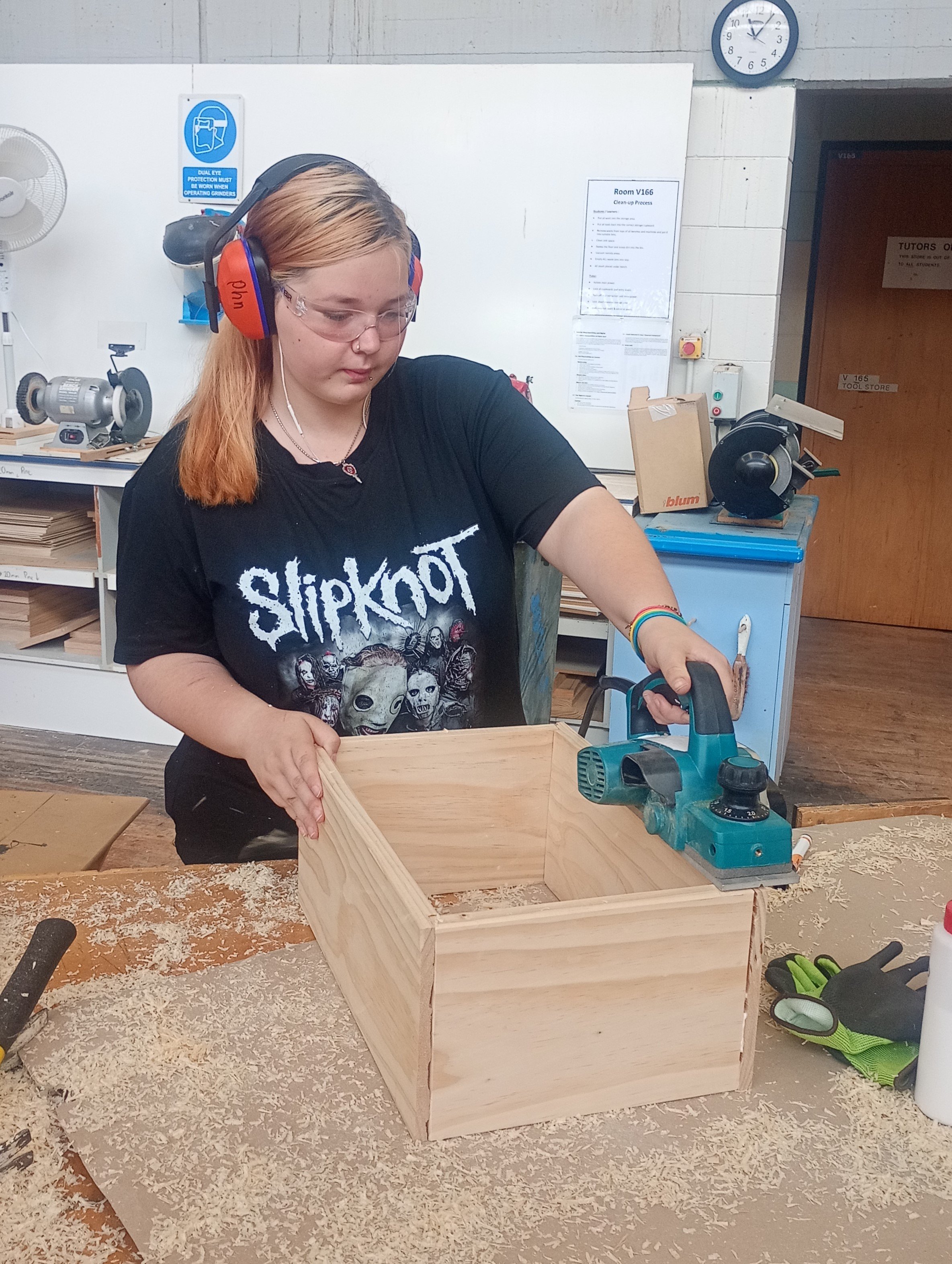

Paetyn Hawkins-Nepia with her work in progress and Mahuta Eramiha with his completed project.
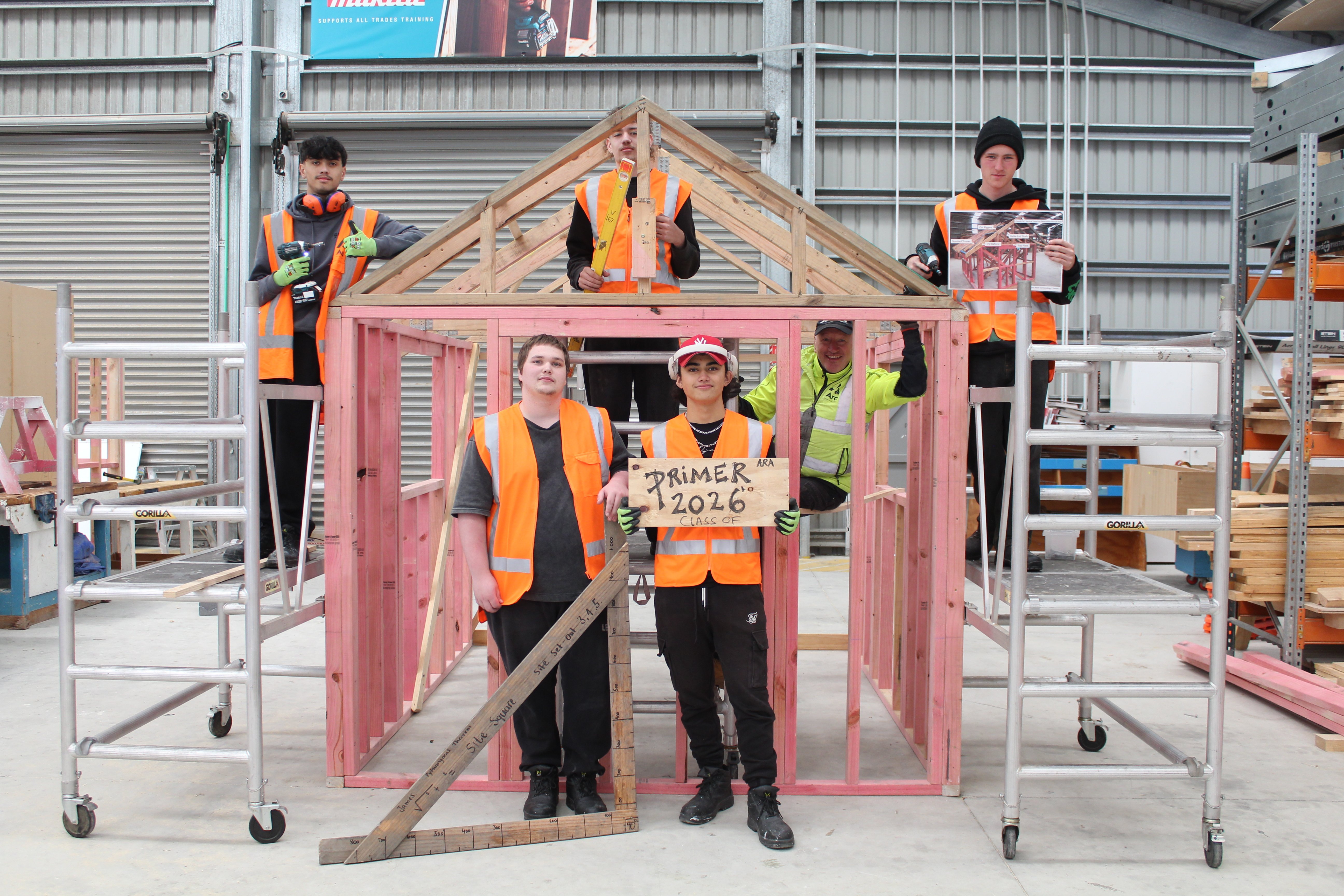
Alongside the joinery project, the group also worked together to frame part of a small house structure, learning how to communicate and coordinate on a job site.
Working in teams, they practised carrying timber, calling for tools and supporting each other to complete the frame safely and accurately.
For Chamberlain, teaching learners at the very start of their trade journey is something he genuinely enjoys.
“They’re still working the world out,” he said. “Learning how to show up, how to work together and how to solve problems.”
The key, he says, is setting clear expectations from the beginning and giving students the space to learn from experience.
“You’ve got to be patient and set expectations on day one. If something goes wrong, you work through it. Sometimes they need to fail a bit so they can learn.”
The workshop isn’t always quiet. The group joked constantly while showing off their projects, ribbing each other and comparing designs, but the finished chests on the bench were proof of what they had achieved over five weeks.
Gould says smaller class sizes and wraparound support help learners build confidence as they find their direction.
“With smaller classes, our tutors provide one-to-one support, mentoring and academic guidance,” she said. “Learners also have access to pastoral care and learning support services on campus, alongside modern workshops and facilities.”
“Ara does really well supporting first-year learners and those who might be taking a second chance at study. Tutors like James make a huge difference,” she added.
And for many, the programme has helped them start to see where they might want to go next.
“It’s good because you get to try different trades,” Pheonix Pari Humm said. “You figure out what you like before you commit to it.”
Next, the students will move on to painting and decorating as they continue exploring possible career paths.
For Chamberlain, watching that early spark of interest develop is one of the best parts of the job.
“Give them a year,” he said with a smile. “They’ll come back bigger, stronger and a lot more confident.”
Find out more about Ara’s Trades Primer programme (New Zealand Certificate in Foundation Skills (Level 2)), or explore Ara’s other trades and pre-trade programmes.