Ara brings vocational education perspective to AIEC 2026
03 November, 2026
Ara returned from AIEC with fresh insights into what students value and where New Zealand has an advantage
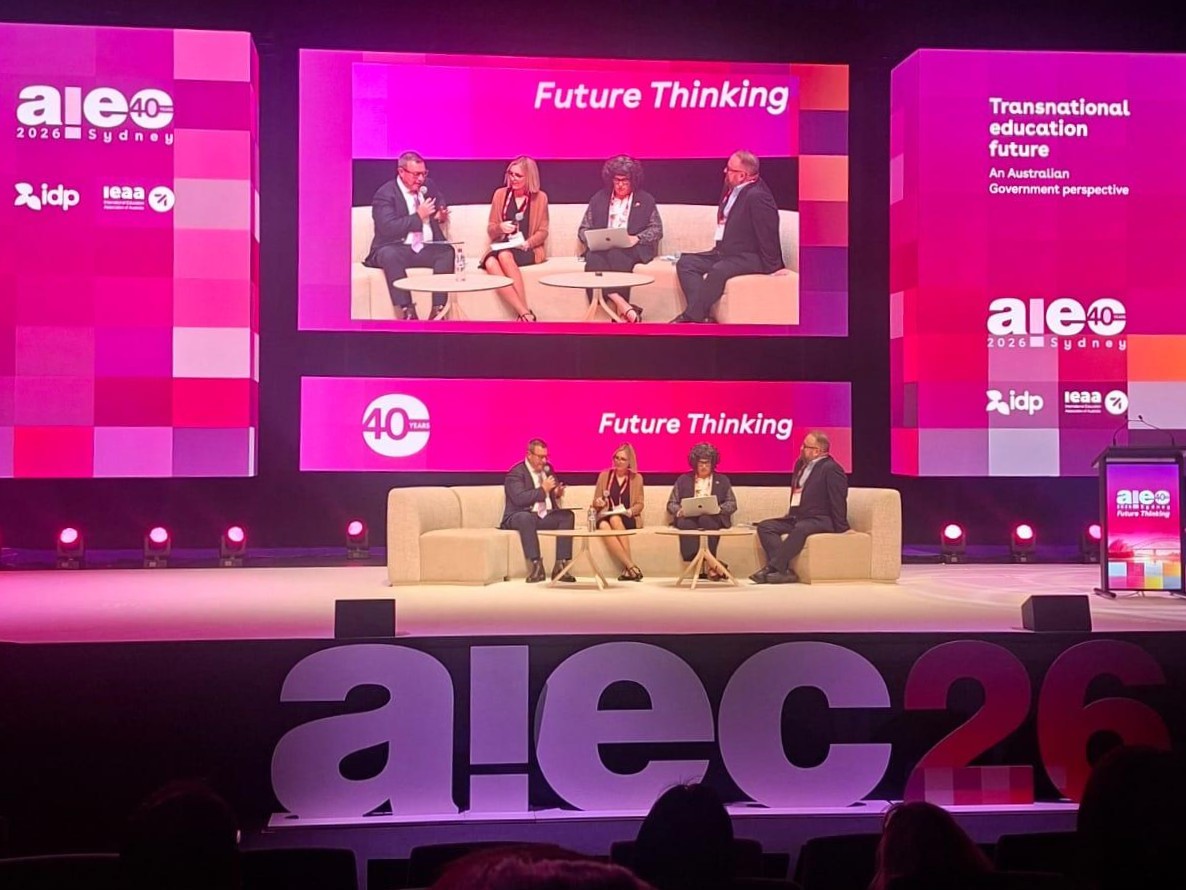
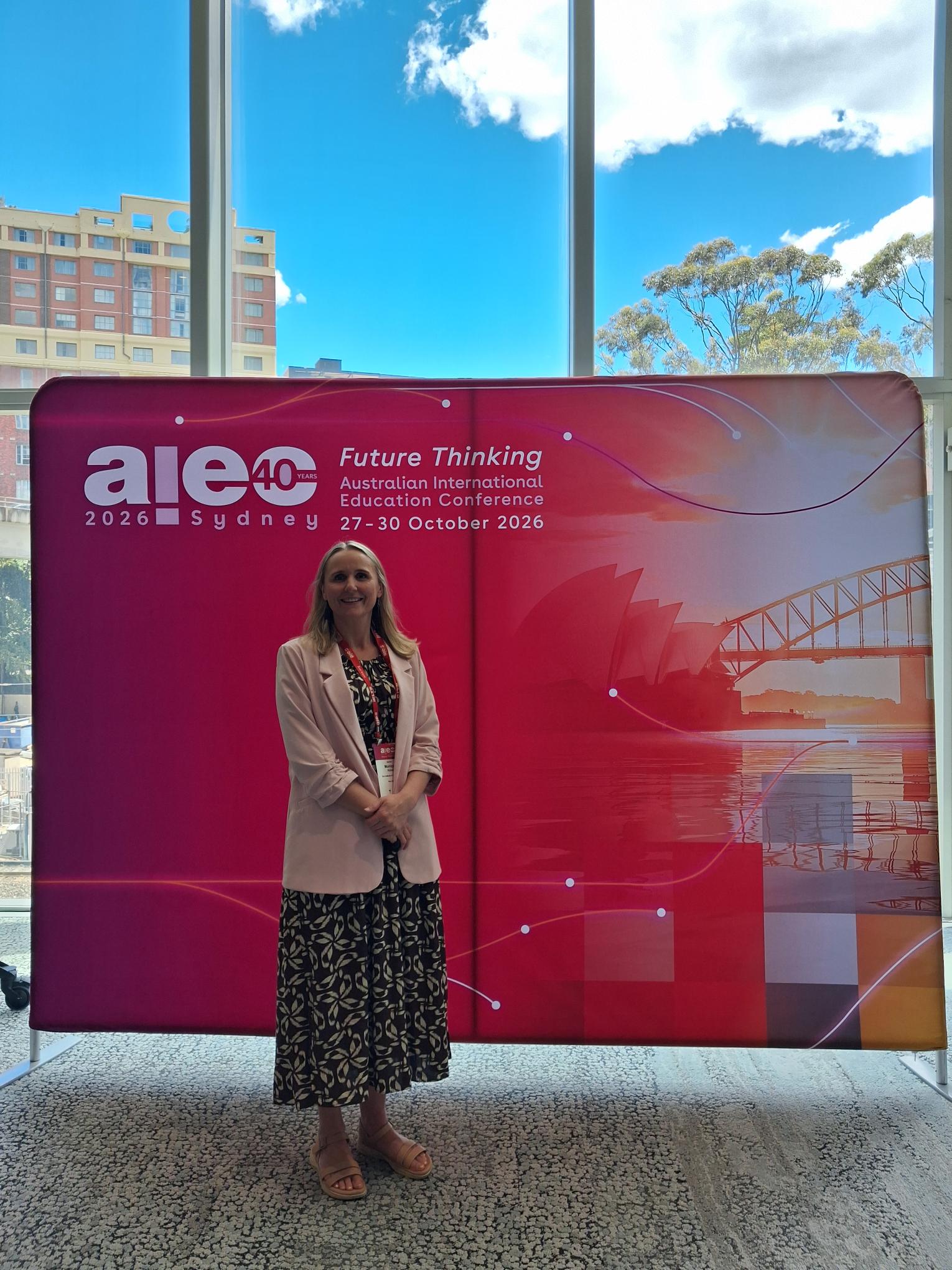
Carl Pavletich, Ara Manager, Local and Global Marketing, and Monique (Mono) Riddell, Ara Global Recruitment Manager, represented Ara at the Australian International Education Conference (AIEC) in Sydney from 27 to 30 October.
AIEC is co-hosted by IDP Education and the International Education Association of Australia and has run for more than 35 years. This year, around 1,700 delegates from more than 500 organisations and 40 countries attended, from English language providers and schools through to universities, vocational training, government and NGOs.
Pavletich said Ara went with a clear aim: making sure vocational and applied education had a place in discussions about where international education is heading.
“AIEC gave us the chance to bring Ara’s vocational and applied education perspective into an international conversation and hear directly from people shaping the sector.
“There’s an opportunity for Ara in that conversation because what international students are looking for increasingly aligns with the strengths of vocational education: strong connections to industry, practical learning and a clear line of sight to employment.”
Across four days of presentations, workshops and conversations, several themes stood out. Among the strongest were the growing importance of employability when students and families choose where to study, the changing ways students research institutions and destinations, and New Zealand’s position in an increasingly competitive international market.
For Pavletich, one of the clearest messages was that international students are increasingly focused on what their education will lead to.
Conference attendees heard that students and their families are weighing the cost of international study against likely employment outcomes, particularly in emerging markets. Institutions therefore need to do more to show the connection between study, careers and employment.
“Employability isn’t a nice-to-have any more. Students and their families want to know that the investment they’re making in education stacks up and where that qualification could take them.
“That makes our connections with industry and our focus on applied, career-focused education increasingly important when we’re talking to international students about why they should choose Ara.”
Students are also looking beyond institutions’ own marketing when making those decisions. Pavletich noted the growing importance of students connecting with peers and hearing directly from alumni and graduates about what studying at an institution is really like. AI is also changing how prospective students research destinations and institutions.
Against a backdrop of significant policy change internationally, New Zealand emerged from AIEC discussions in a relatively positive position.
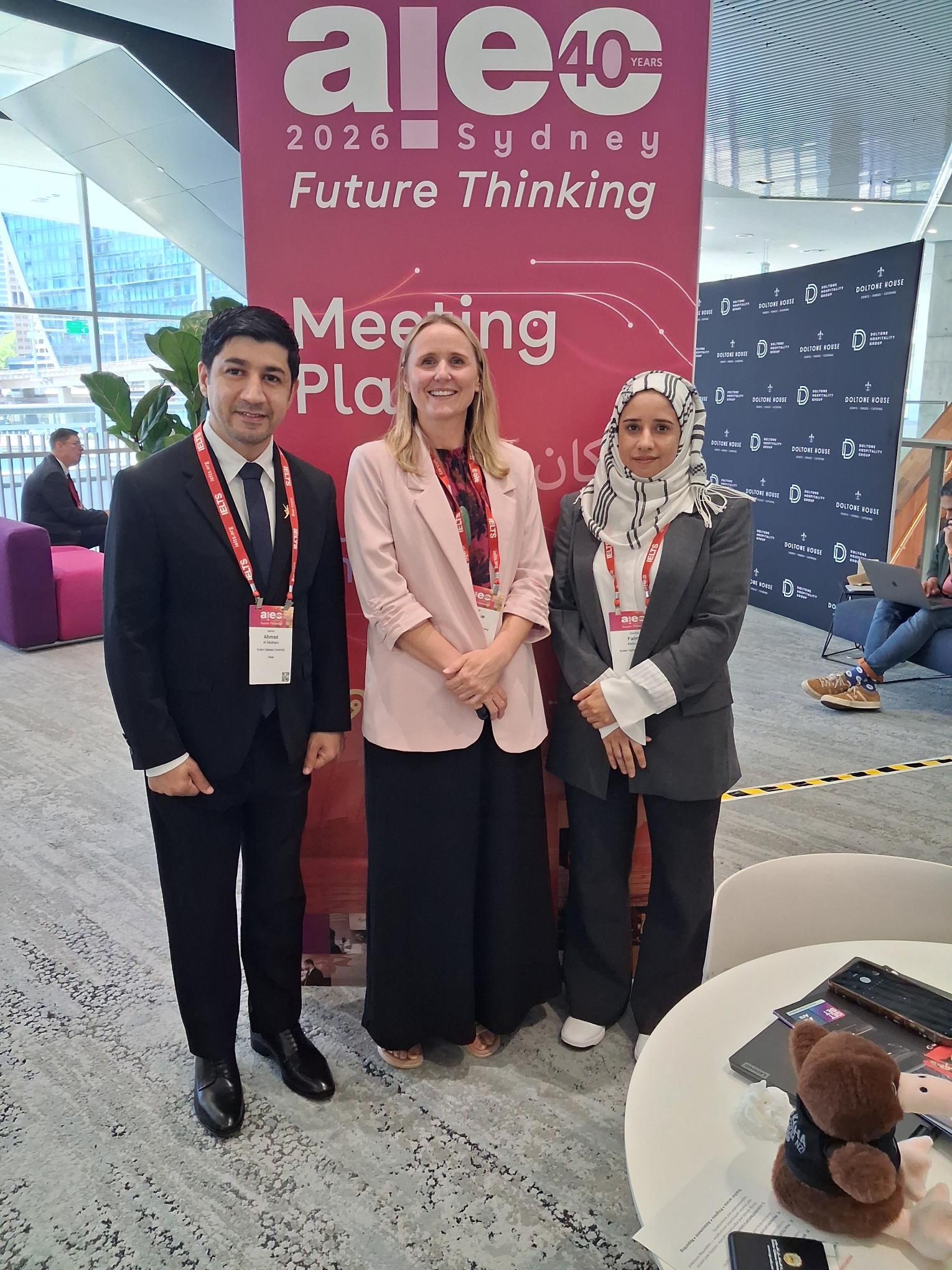
Mono Riddell (centre) with colleagues from Sultan Qaboos University in Oman.
Riddell noted a global panel featuring perspectives from the United States, Canada, Australia and New Zealand where the discussion about other major study destinations was considerably more challenging, while New Zealand’s position was more positive.
One reason was the country’s “social licence” for international education: the extent to which communities recognise and support the contribution international students make.
“New Zealand really stood out. Education New Zealand ran a session about social licence and how New Zealand does this well. Essentially, New Zealanders have a positive view of international students and understand the benefits they bring.
“That’s something we shouldn’t underestimate. Students aren’t choosing an institution in isolation. They’re choosing a country, a city and a community as well.”
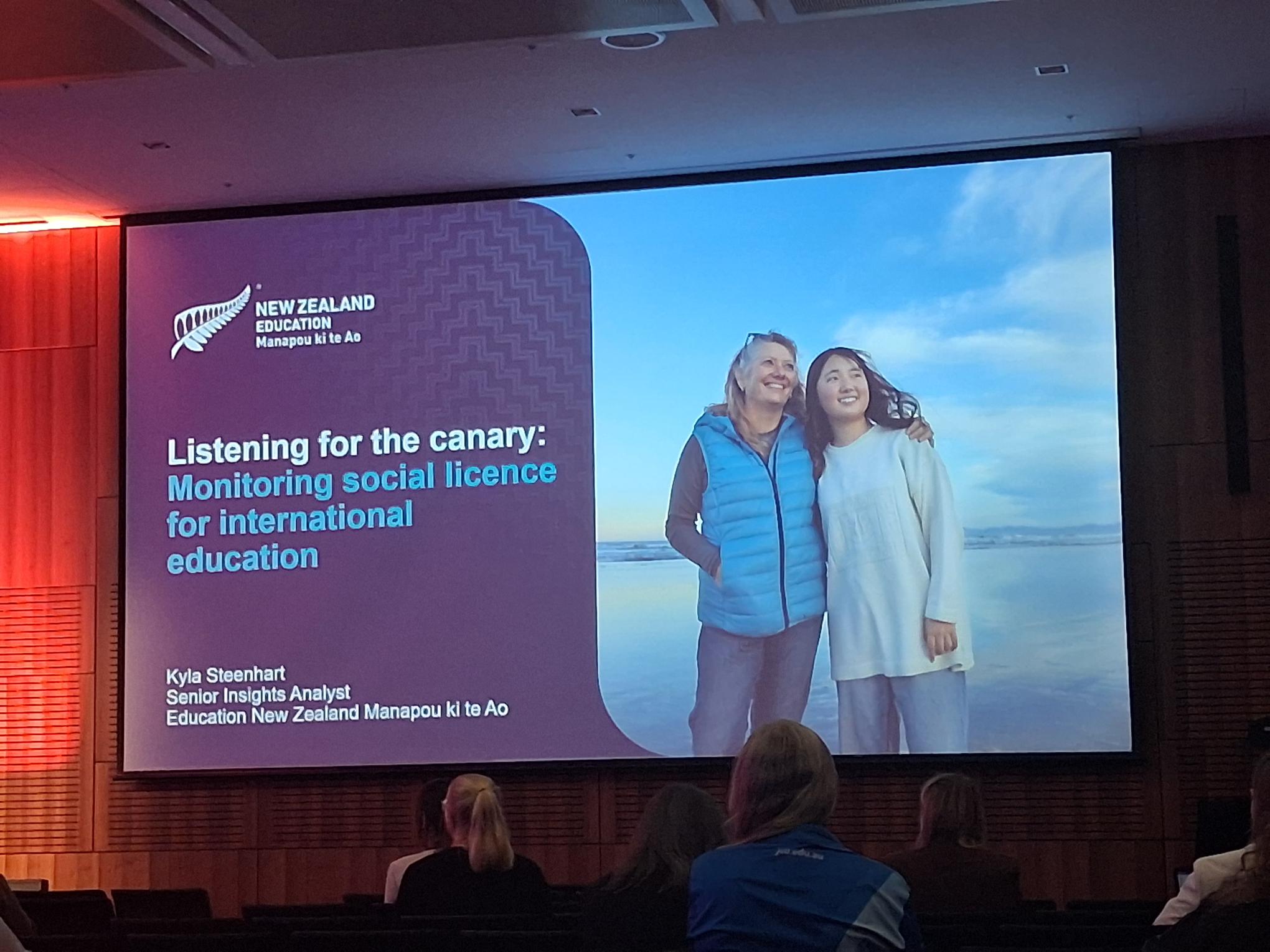
Education New Zealand ran a session about the importance of social licence.
Another theme was the changing geography of international education.
The traditional dominance of “top four” destinations (Australia, Canada, the United Kingdom and United States) is being challenged as other countries strengthen their domestic education systems and increase their international presence. Malaysia, Ireland and New Zealand were among the countries discussed, while India’s ambitions to substantially expand participation in higher education are also creating opportunities for international partnerships, joint institutions and programmes.
Pavletich said this reinforced a wider shift in how institutions think about international education.
“Student mobility isn’t disappearing, but it is evolving. We need to think beyond the idea that international education is just somebody coming to New Zealand to study and then staying here.
“For many students, the value is in becoming globally connected and taking their skills wherever their career takes them. That changes how we think about the experience we provide and the partnerships we build.”
The conference closed with a keynote from Australia’s former Prime Minister, Julia Gillard, who drew on her experience in government and her continuing international work in education and gender equity to reflect on the challenges and opportunities facing the sector. Her address provided a fitting conclusion to a conference concerned with how education can respond to complexity, embrace change and shape its future.
“It was a real highlight to hear from Julia Gillard,” Riddell said.
“Her perspective reinforced that education has to keep evolving as the world changes around us. For Ara, that means being clear about the contribution we can make, staying open to new ways of working and making thoughtful decisions about where we focus our energy.”
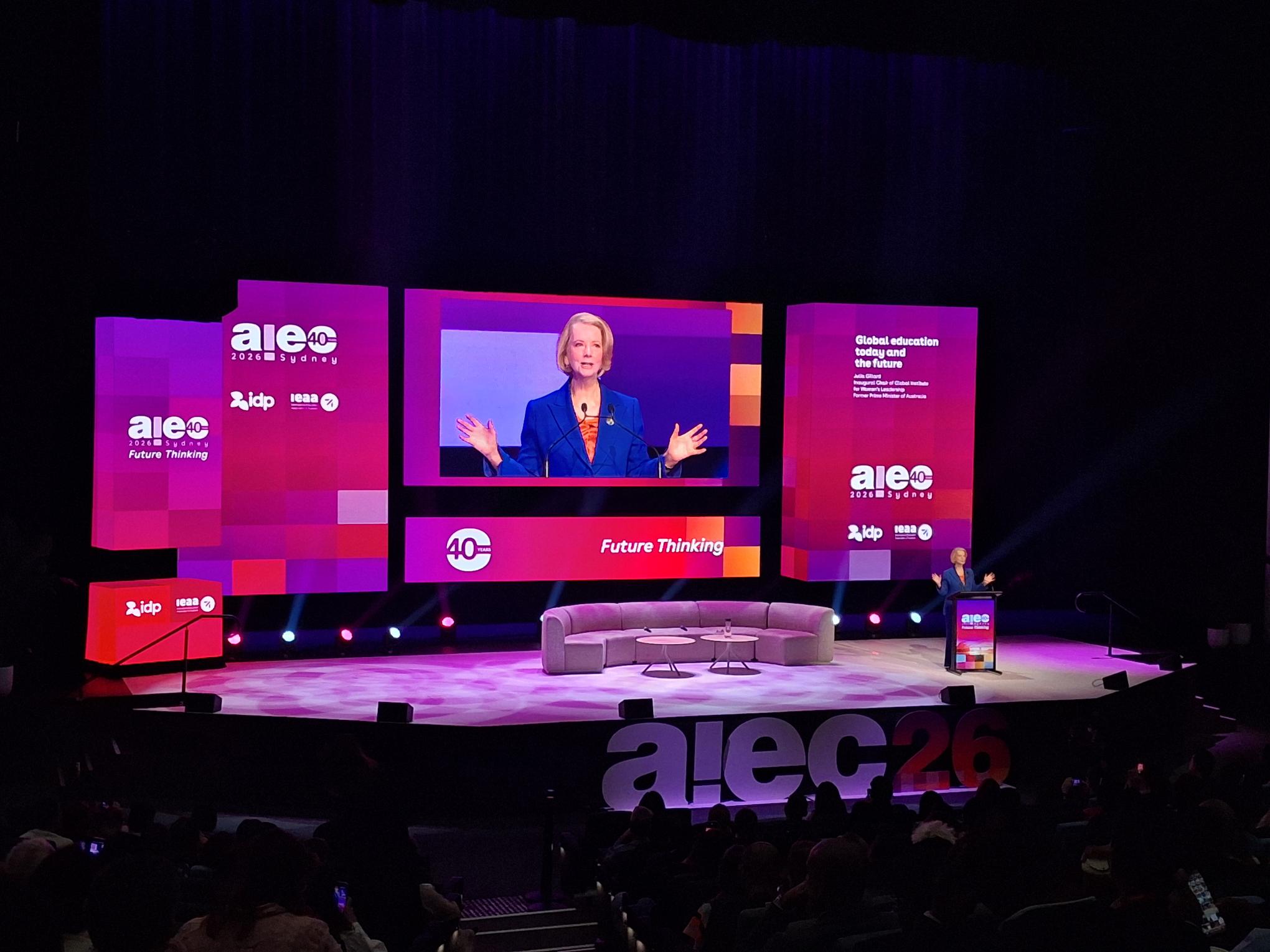
Julia Gillard, former Australian Prime Minister, spoke about the issues and opportunities facing the international education sector.
AIEC also provided opportunities for Pavletich and Riddell to explore potential partnerships and transnational education, where institutions deliver education across national borders through arrangements such as partnerships and joint programmes.
“The value of AIEC is that you have so much of the international education ecosystem in one place,” Riddell said.
“The formal sessions give you the big picture, but some of the most valuable conversations happen around them. You get to hear what potential partners are looking for, test ideas and identify where there could be a good fit with Ara.
“We’ve come home with connections to follow up and, importantly, a clearer picture of where Ara can add value.”
For Pavletich, the challenge now is turning those insights into action.
“You come away from a conference like this with a notebook full of ideas. The important part is working out which ones can make a meaningful difference for Ara.
“There’s plenty for us to think about, particularly around how we demonstrate employment outcomes, connect prospective students with the experiences of our graduates and continue building the international partnerships that make sense for Ara.”