Engineering ingenuity takes top honours at Ara
05 November, 2026
Award-winning projects using AI, automation and solar technology were among the final-year projects showcased as Ara’s emerging engineers put their problem-solving skills into practice.
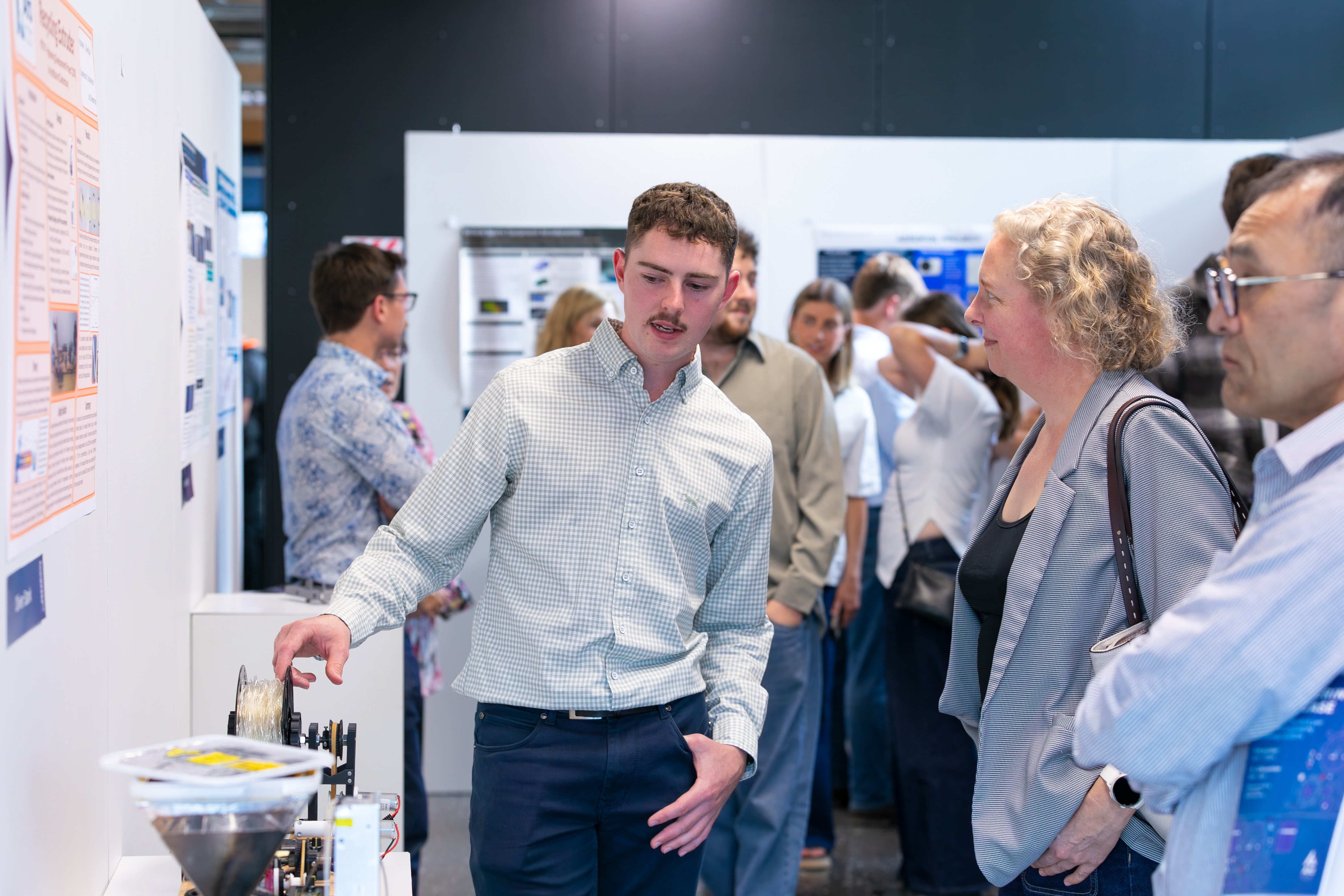
Ollie Stark with the small-scale extruder he developed to turn waste from 3D printing into reusable plastic filament.
From teaching a computer to spot potholes to developing solar technology for off-grid camping and improving automation on a manufacturing line, Ara engineering ākonga have tackled very different real-world problems in their final-year projects.
The work was celebrated at Ara Institute of Canterbury’s 2026 Engineering Showcase, where Bachelor of Engineering Technology students presented capstone and key course projects, each representing around 300 hours of work.
Industry guests and Ara kaimahi (staff) jointly selected the best projects across civil, mechanical and electrical engineering, with awards presented on the night.
AI takes on potholes
Civil engineering student Campbell Searle received the Best Civil Engineering Project award for work investigating how artificial intelligence could help engineers identify problems on our roads.
Campbell developed and trained computer-vision models to detect potholes and different types of cracking from road imagery. His project also explored how defects could be mapped and analysed to support more efficient road inspections and maintenance decisions.
The award was sponsored by Seipp Construction and presented by Peter Seipp.
Getting better reach from a cobot
Mechanical engineering students Ekam Singh and Jonathan Derwall shared the Best Mechanical Engineering Project award for their work on improving the use of a collaborative robot (cobot) to automate a labour-intensive manufacturing task.
Using computer vision, their project enabled the cobot to identify small PCB shielding components, determine which tool it needed, automatically collect that tool and transfer the components ready for the assembly line.
Ekam focused on the vision-control side of the project, while Jonathan developed the custom tooling station that enabled the cobot to change tools for different components.
The award was sponsored by Caliber Design and presented by Jonathan Prince.
Solar power for the Kiwi campsite
Electrical engineering student Joel McKinnon brought engineering to a challenge familiar to New Zealand summer campers: making reliable use of solar power while off-grid.
Joel developed a portable solar controller to optimise power from a 100W solar supply and safely charge a battery bank. The custom-built unit also manages its own cooling and provides four independently controlled lighting outputs for different areas of a tent setup.
Inspired in part by camping around the Waitaki hydro scheme, Joel hopes to build a career in automation, low-voltage electronics and protection systems.
His Best Electrical Engineering Project award was sponsored by Trimble Navigation NZ Ltd and presented by Lauren Hall.
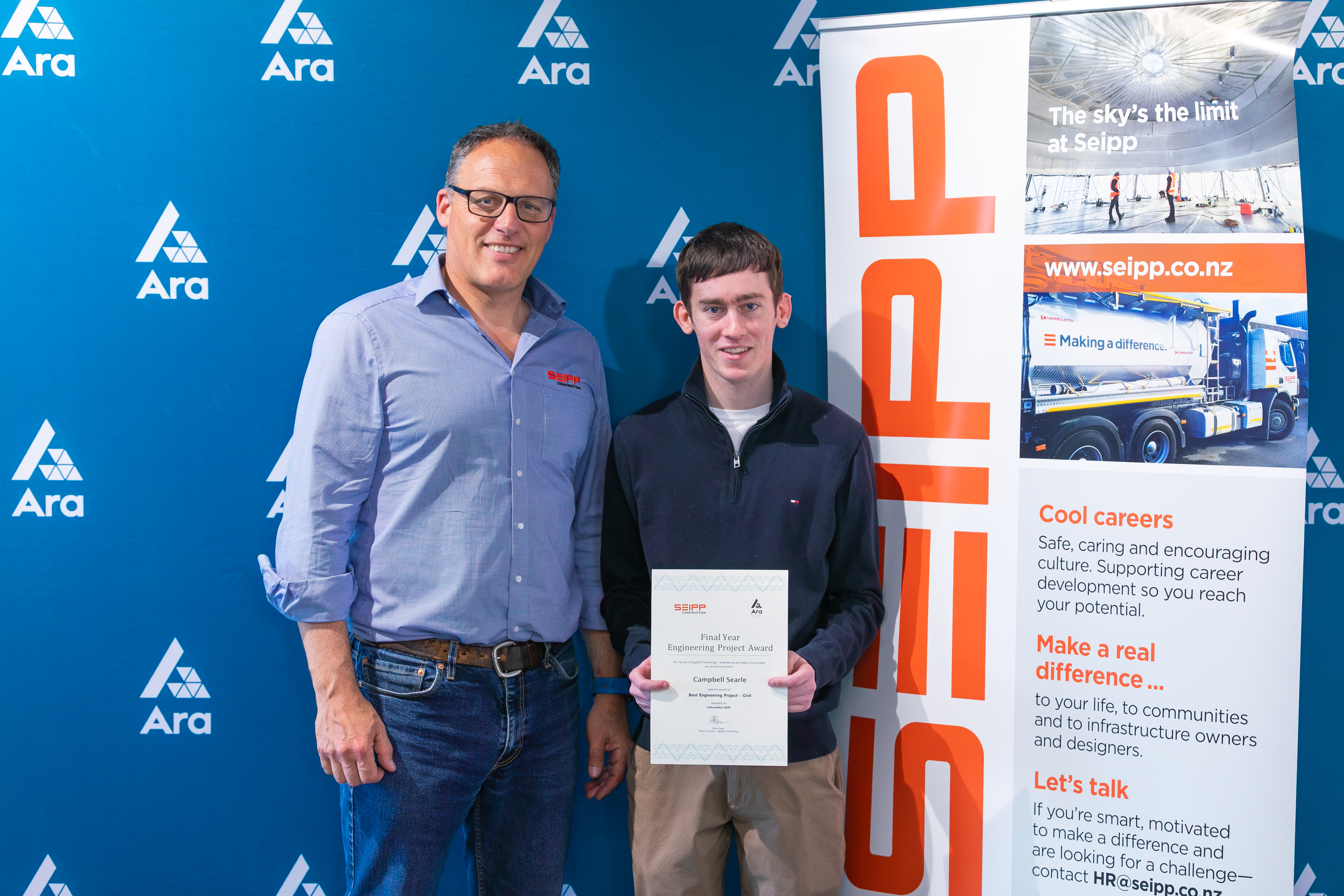
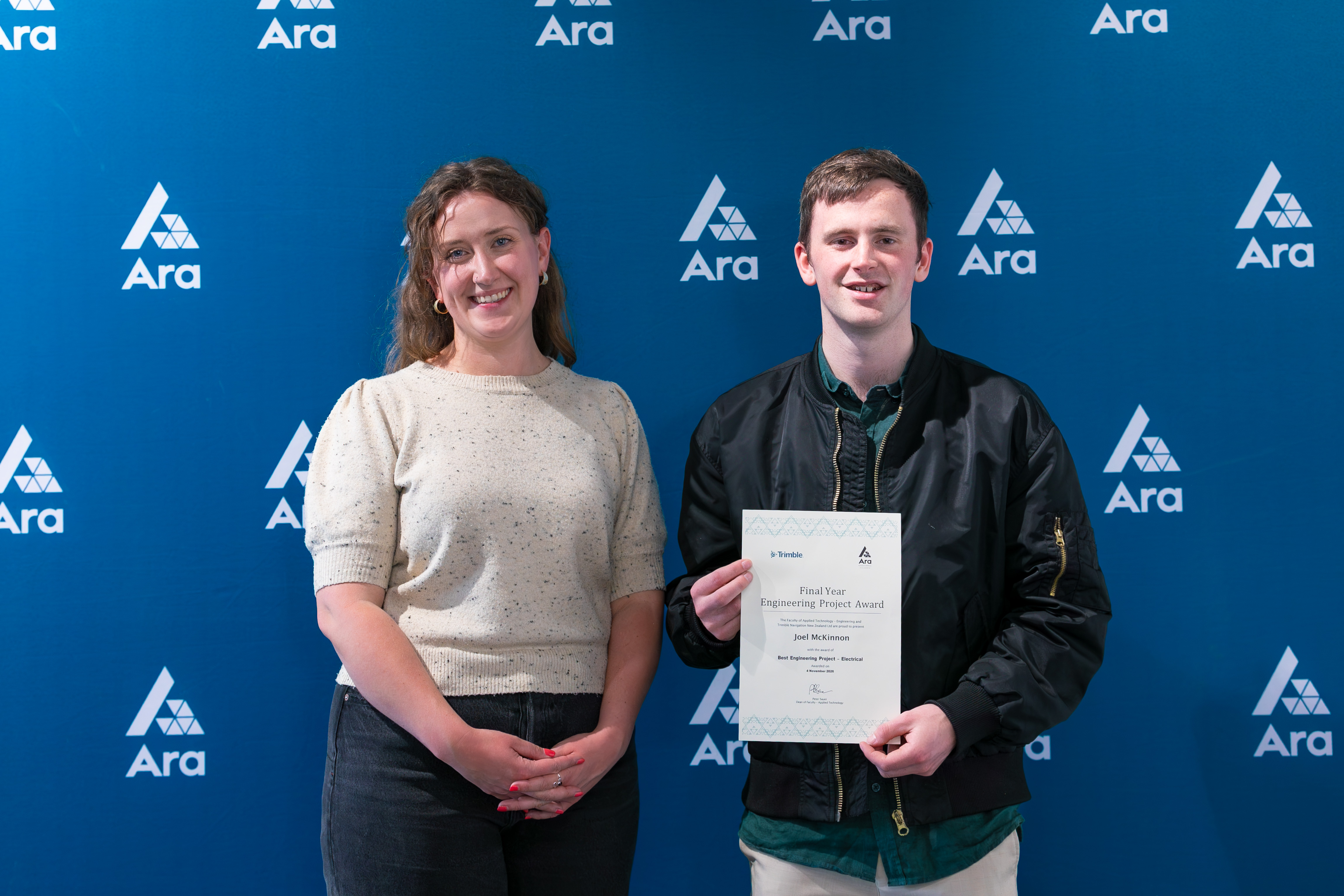
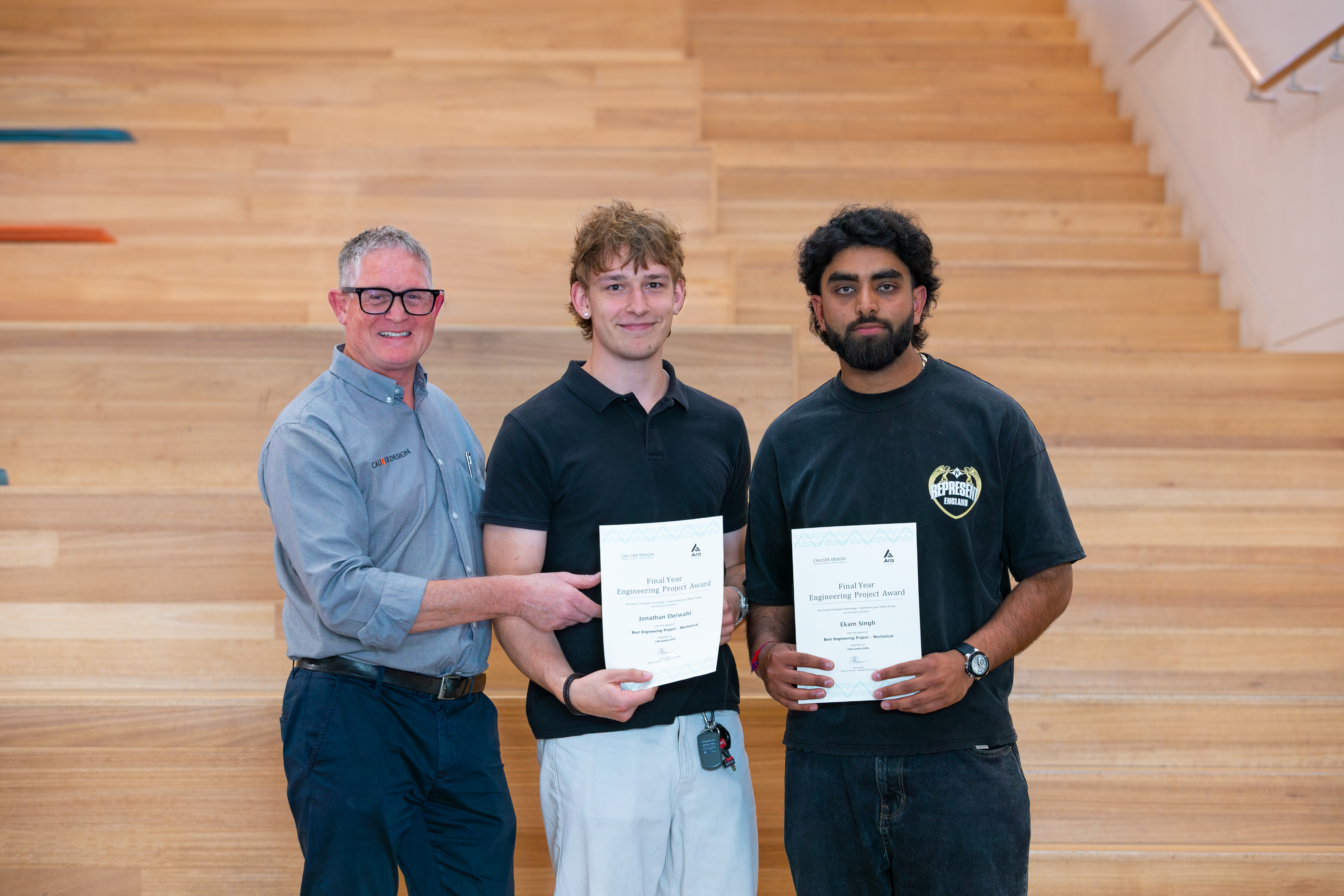
Clockwise from top left: Campbell Searle (best Civil project) with Peter Seipp, Joel McKinnon (best Electrical project) with Lauren Hall, Ekam Singh and Jonathan Derwall (joint-winners best Mechanical project) with Jonathan Prince and Portfolio lead Robert de Roo.
Industry backs emerging engineers
Industry representatives from Tait Communications, Raz Tec, Connetics, Britten Museum and Quarticom Limited helped judge the projects.
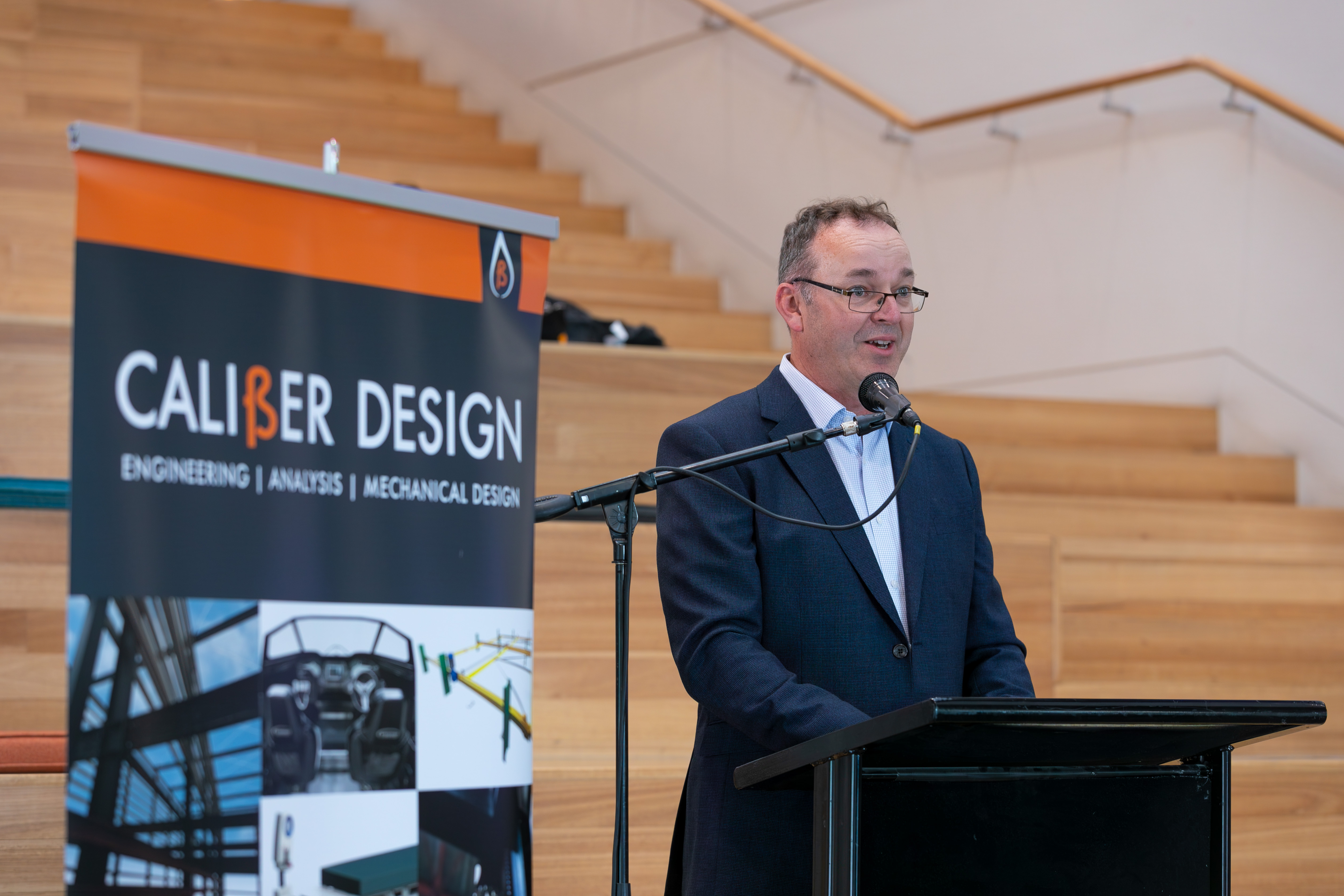
Caliber Design founding director Jonathan Prince, who has been involved in judging the Showcase for several years, said this year’s projects had raised the bar again.
“This is another step up. In industry, we want to see young engineers who can come up with good ideas but also take them through to completion, so well done to all the students for reaching this level,” he said.
Closing the event, Senior Academic in Applied Engineering and Computing Ian Chesterman acknowledged the many ways industry supports engineering at Ara, from providing equipment and industry tours to serving on advisory committees, advocating for Ara and sponsoring student projects.
He said those relationships give students real-world experience, current industry knowledge and a clear sense of where their studies can take them. The Tait Foundation, Robinson Research Institute, Electricity Engineers’ Association and Trimble were also acknowledged for supporting students through equipment and scholarships.
Portfolio Manger for Applied Engineering and Computing Robert de Roo congratulated the students and challenged them to continue developing professionally, seek out good mentors and become active participants and future leaders in their fields.
“As engineers, you have acquired different skills and ways of thinking about how to solve a problem. I challenge you to use those skills to be an active part of your communities outside of your work.”