Nightmares lead to dream creative project
07 September, 2026
The work of Ara postgraduate art ākonga Sierra Bright takes up residence in Te Matatiki Toi Ora The Arts Centre.
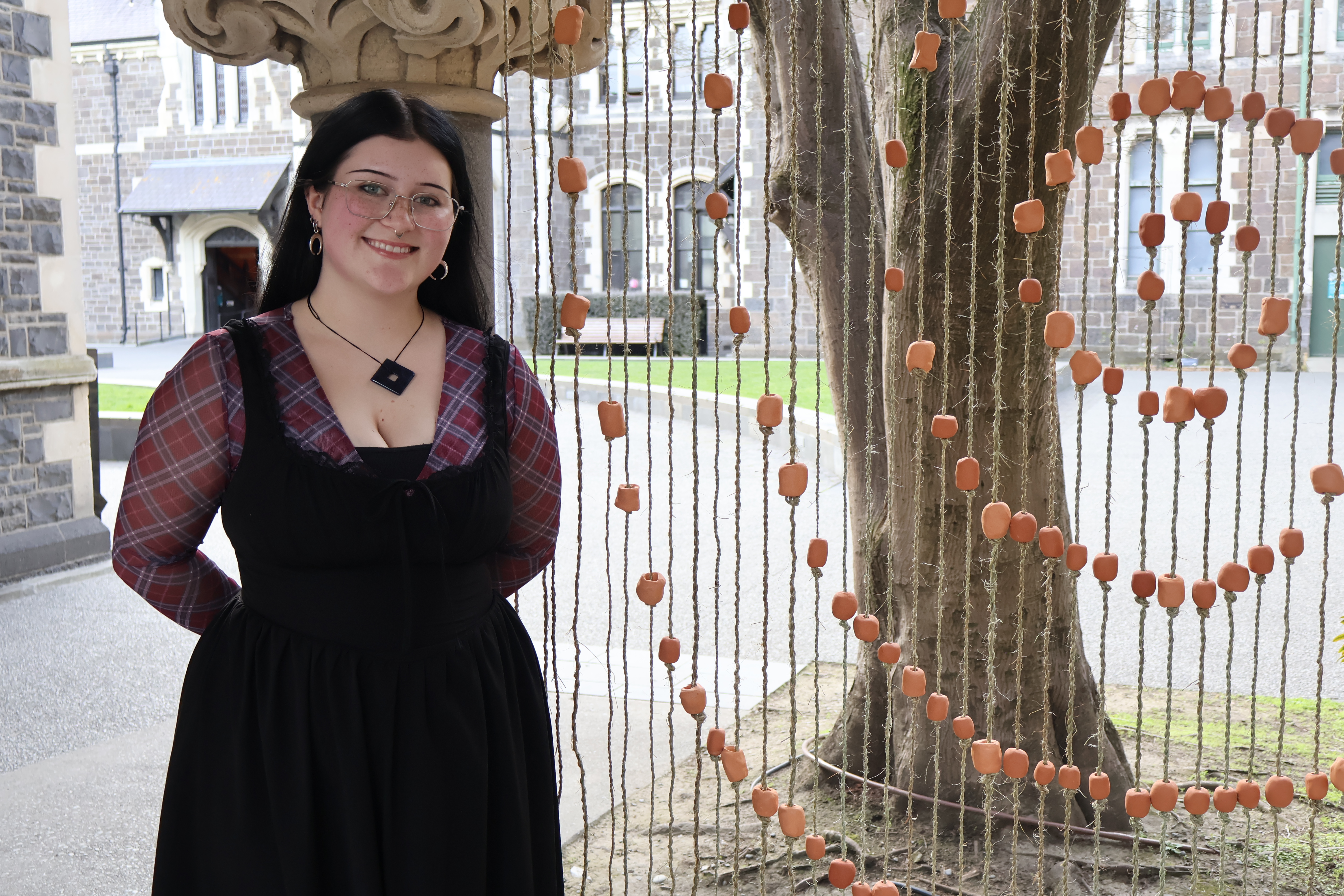
Sierra Bright (Rangitāne, Ngāti Kuia and Ngāi Tahu) at the unveiling of Hoki atu ki te ao moemoeā
You could say Ara Bachelor of Design (Visual Art) graduate Sierra Bright (Rangitāne, Ngāti Kuia and Ngāi Tahu) is living the dream.
While undertaking postgraduate study in visual art at Ara, she has produced a major new work now installed at Te Matatiki Toi Ora The Arts Centre, drawing on her experiences of chronic nightmares as a child.
Bright said Hoki atu ki te ao moemoeā (Returning into the World of Dreams) was achieved through the collective efforts of her community (hapori), ākonga (students) and whānau (family).
It depicts a koru pattern of clay beads threaded onto strands of woven harakeke (flax) and now hangs delicately between iconic stone columns and arches of the Christchurch Arts Centre.
“There’s been a lot of long days and working into the night on this project. It's been a massive labour of love, but it's been so worth it,” Bright said.
“I’m so thankful to all those who contributed massively to processing the harakeke and making it into twine and forming the clay beads.”
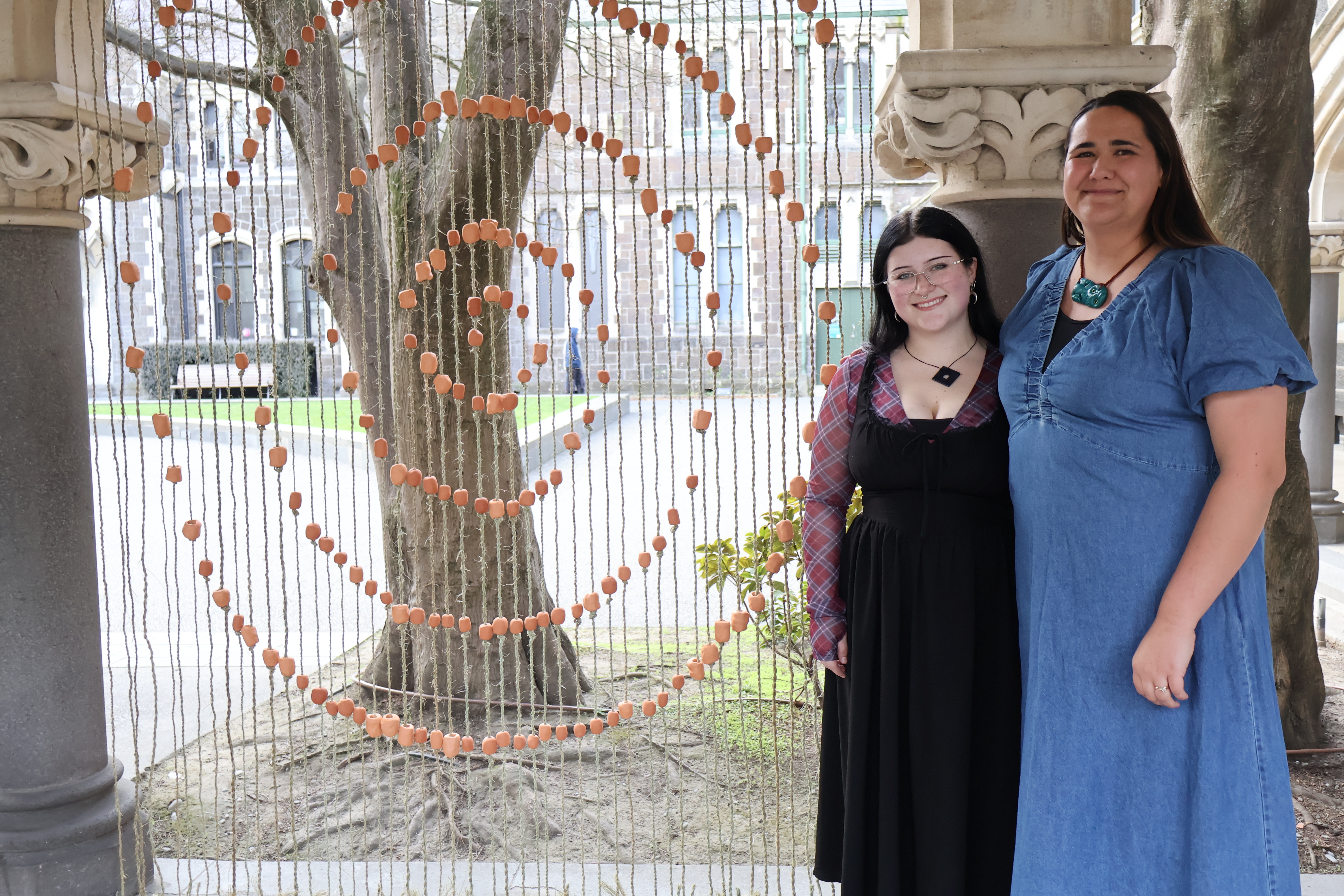
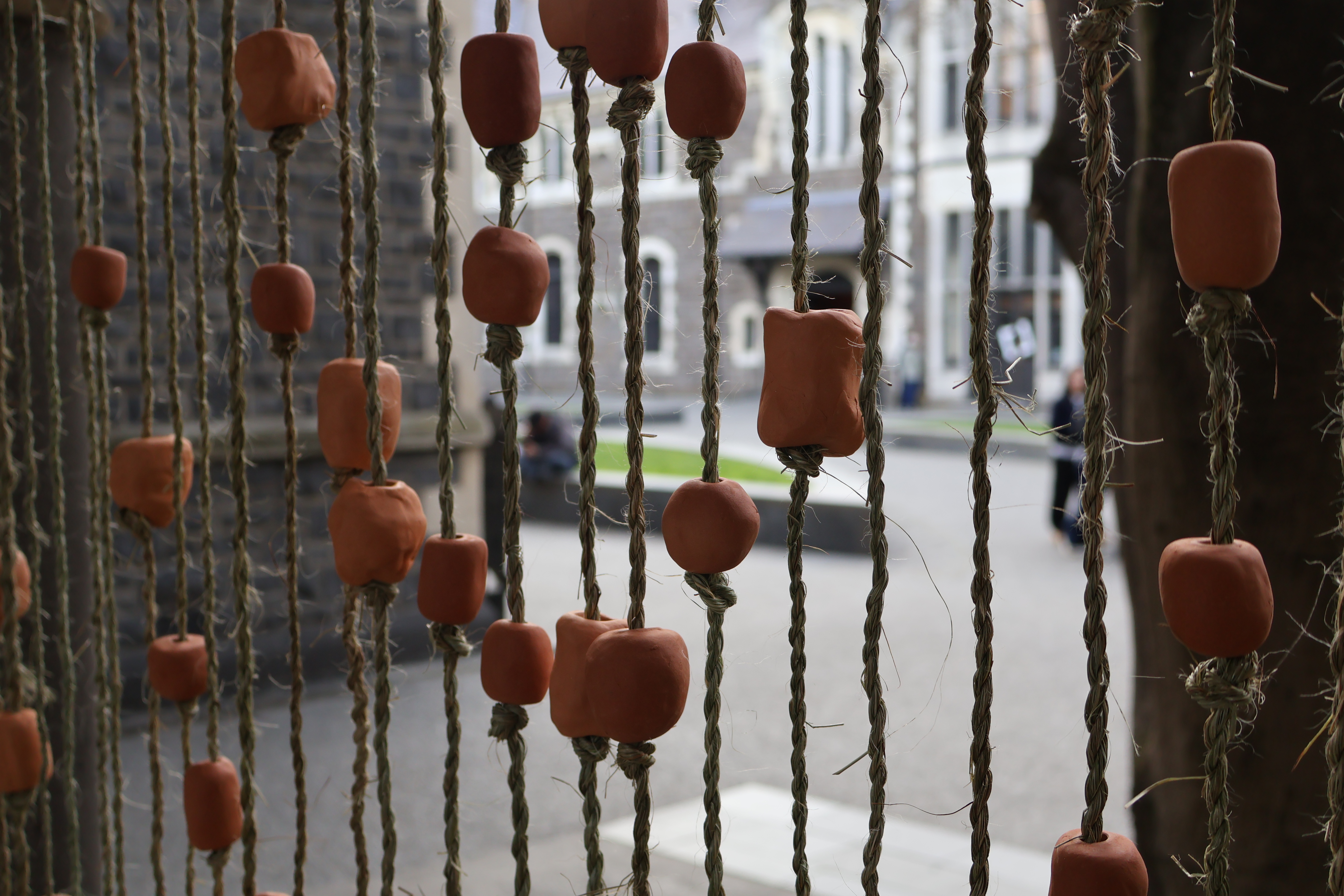
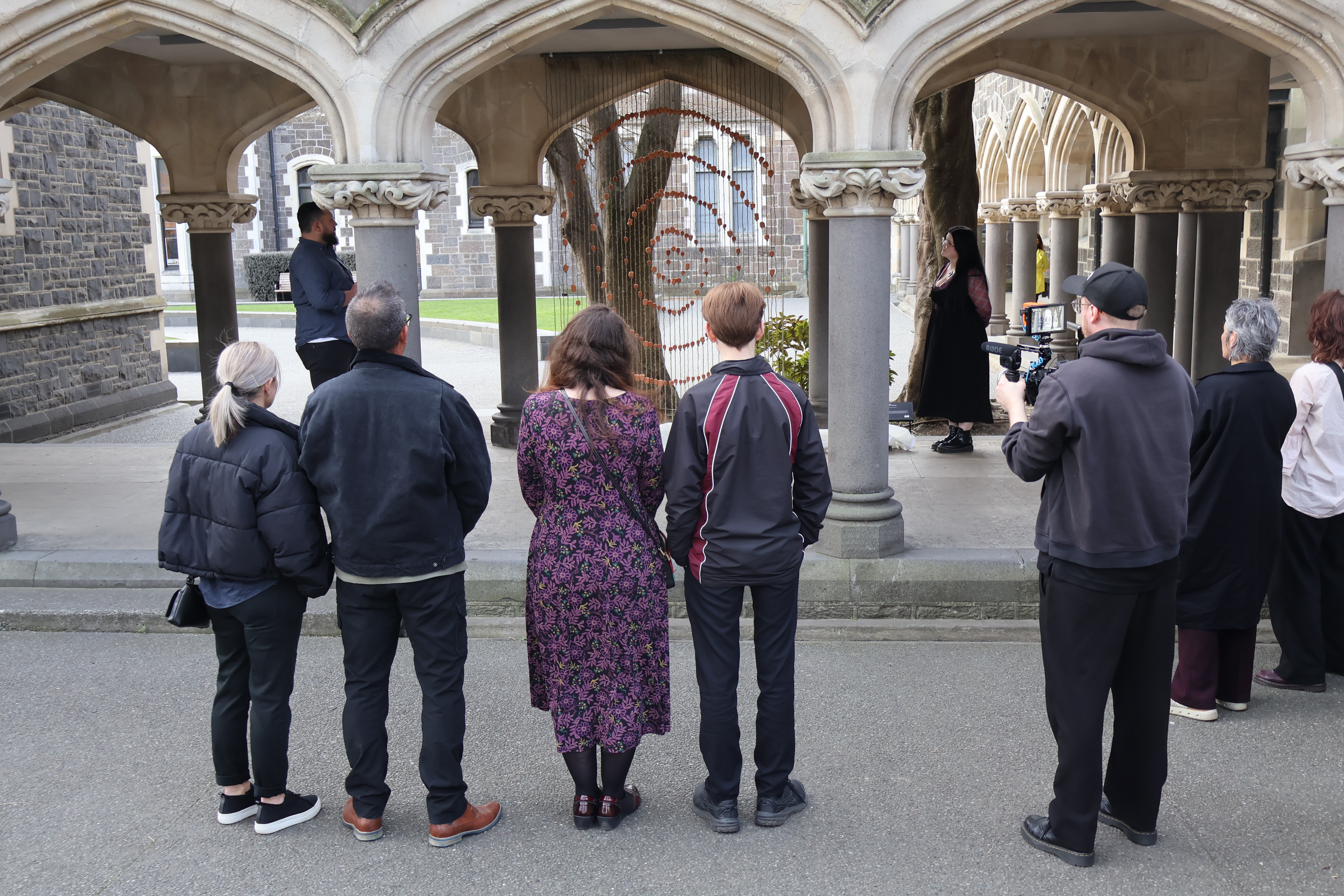
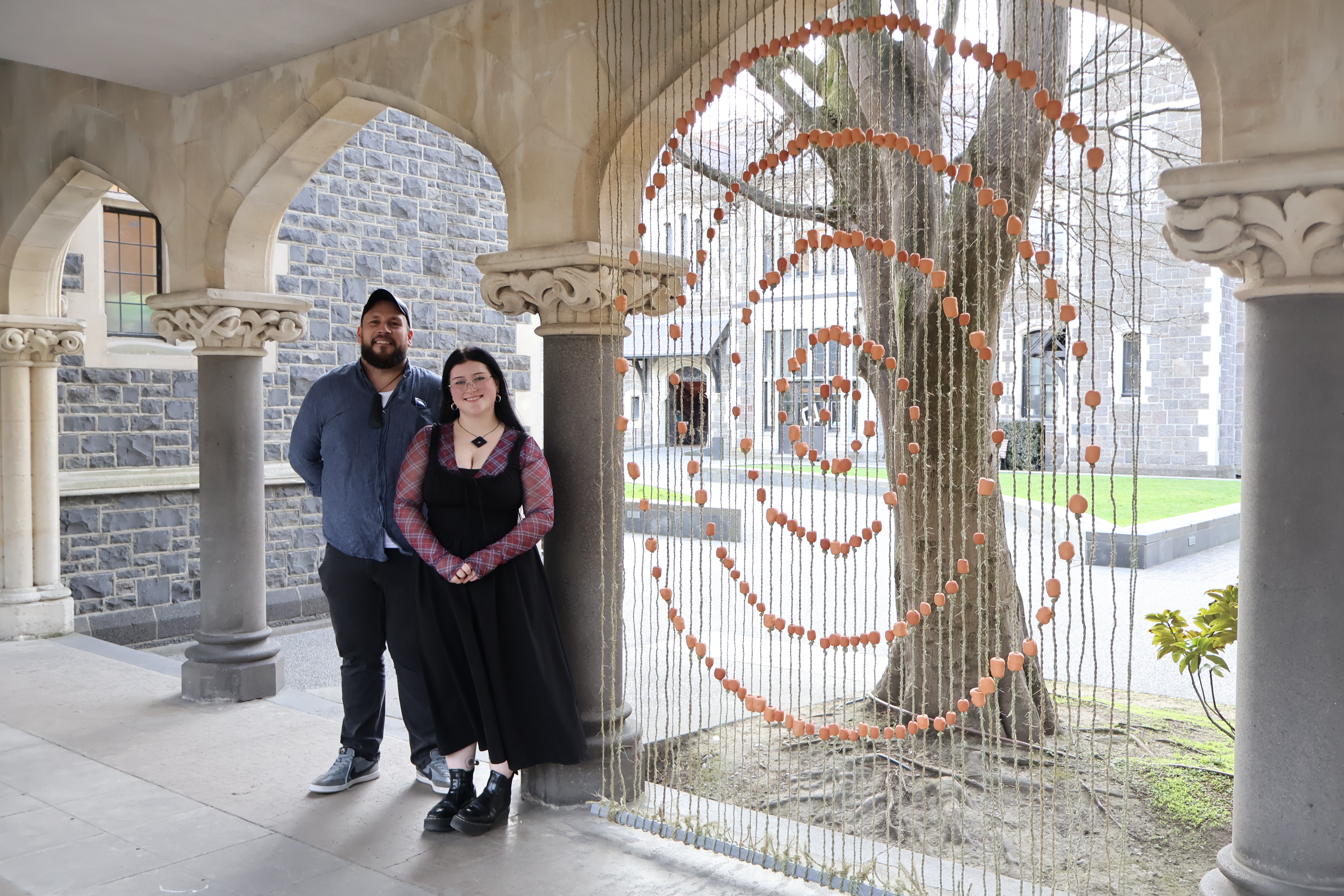
Images from the unveiling of Hoki atu ki te ao moemoeā including the artist with Te Whare Tapere Kaiwhakahaere – Ngā Toi Māori Programme Manager Jemma Mitchell and mana whenu (and trustee of Te Matatiki Toi Ora) Corban Te Aika (Ngāi Tahu)
Te Whare Tapere, a whare toi (art space) for ngā toi Māori (Māori art) and ringatoi Māori (Māori artists) within Te Matatiki Toi Ora, supported the project sharing kōrero, providing a sounding board and hosting a community wānanga as part of the making.
Kaiwhakahaere – Ngā Toi Māori Programme Manager Jemma Mitchell said Bright had generously shared the processes that inform her practice.
“In doing so, she encourages fellow ākonga and ringatoi to explore the many forms their own whakaaro and stories might take. Through kōrero and collective making, she welcomed whānau and hapori to contribute to this installation while holding the kaupapa and artistic direction throughout.”
The work was installed by a Te Matatiki Toi Ora team led by John Owen and unveiled with a blessing led by Corban Te Aika (Ngāi Tahu), who attended as mana whenua and as a trustee of Te Matatiki Toi Ora.
Bright, who experienced recurrent nightmares as a child, said the work was a visual representation of the journey into a dream world with the koru pattern representing the spiral course that one's wairua (spirit) follows on its way towards the dream state.
“When you make koru, you always come over the point where you’ve been before, but it’s never the same. It’s above or below, inside or outside all while following a path that spirals around itself. It's always progressing though it may not feel like it.”
“In this piece the origin point represents birth or the first time you dream. In the dream world you’re both getting further and further away while also returning to the place.”
Bright describes the use of harakeke as “a direct connection to my whakapapa and my whenua”.
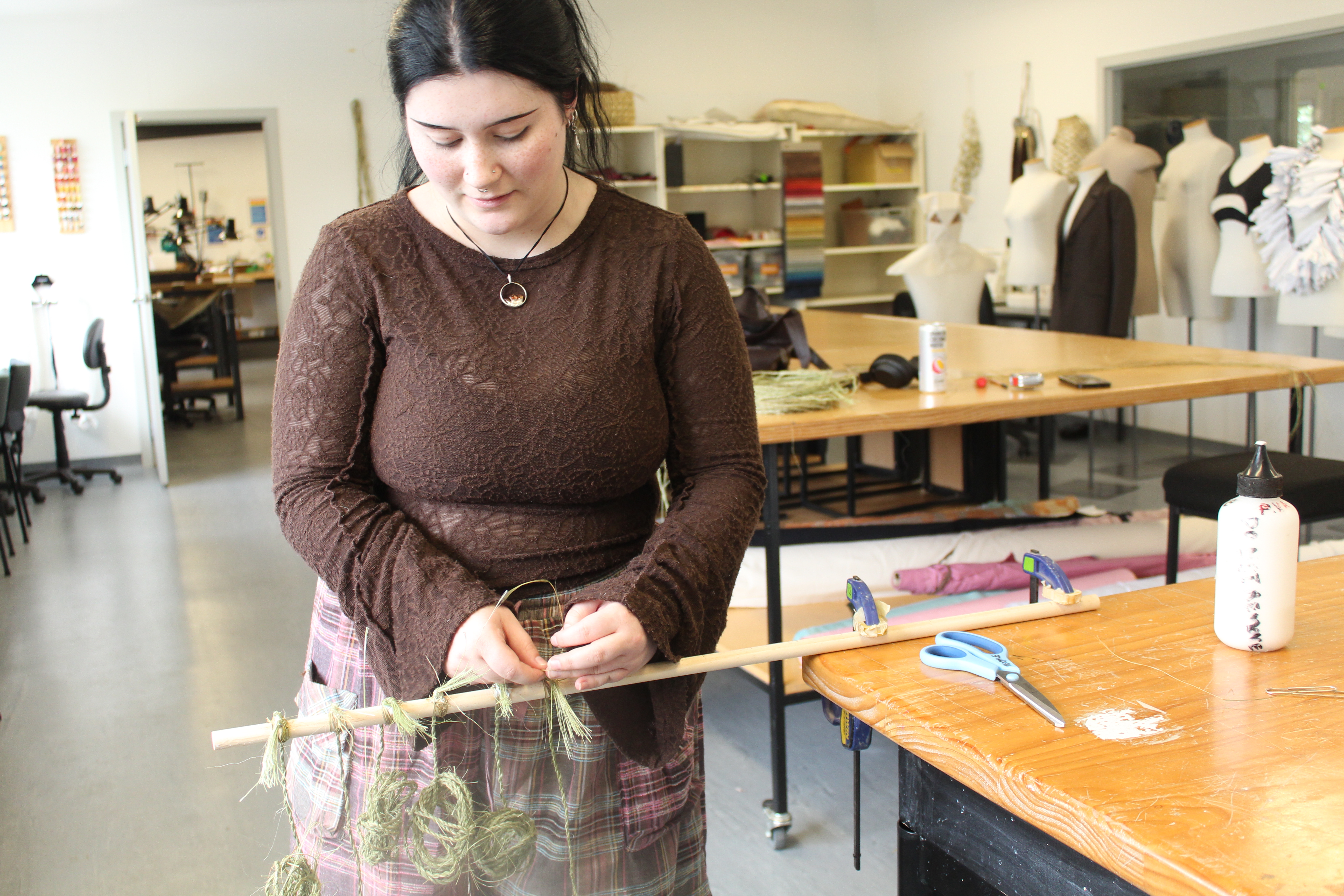
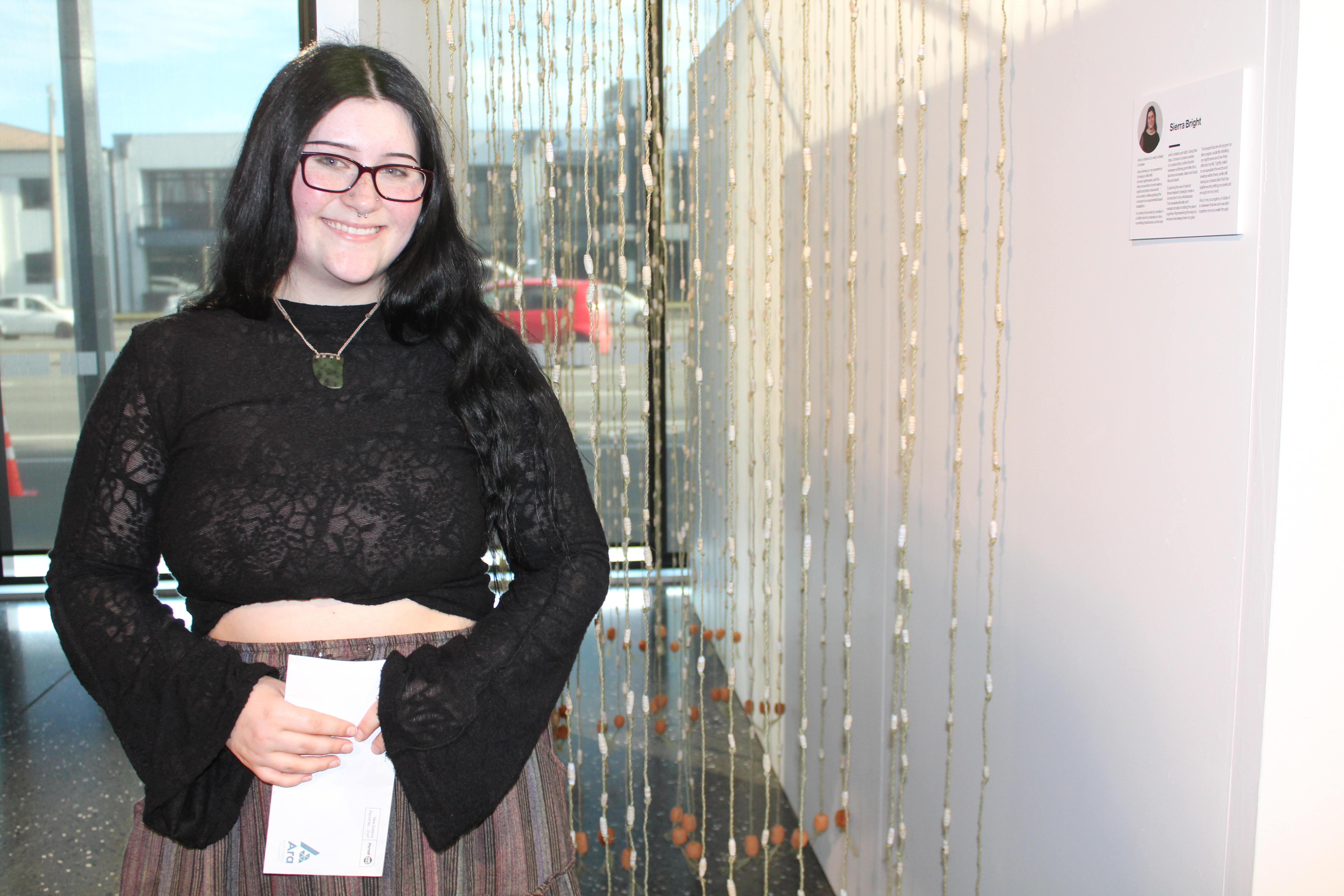
Sierra working on Ārai her award winning final project for her Bachelor of Design (Visual Art)
She grew up around the practice of harvesting and using harakeke in creative work, but her love for it was reignited during her studies at Ara, which started with a Certificate in Creativity in 2022 and progressed to the completion of her degree last year.
Rather than following prescribed methods, she has developed her own approach, guided by instinct and the early teachings of her dad.
For her final Bachelor of Design project, she spent hundreds of hours creating Ārai, a series of beaded harakeke curtains. The work was made with 4000 paper beads made from pages of her nightmare diaries, 3000 metres of twine and hundreds of clay beads to weigh the strands.
Her work was recognised with an end-of-year project award and an Ara Eke Panuku Māori excellence award at the completion of her studies.
It was also displayed in the 2025 Whakawhanaungatanga exhibition at CoCA Gallery.
Bright said her latest project may be a farewell to her work inspired by nightmares.
“Last year, in the final year of my bachelor's, it was a more pessimistic exploration of the bad parts of experiencing chronic nightmares and trying to work through those. I think Hoki atu ki te ao moemoeā, especially with the koru pattern, is kind of like wrapping it up. It's bringing it to an end, and involving others in the work makes it really lovely.”
“It means that it's not just my story being told. It's also other people's too with their whakapapa being put into it, which is really amazing.”
Bright said she felt honoured to be connected with Te Whare Tapere which began with Ārai being exhibited as part of He Wāhanga nō te Kōrero and continued through the creation of Hoki atu ki te ao moemoeā.
“This has all worked around my postgraduate study, and it feels amazing being able to exhibit as a young Māori woman in this historic, predominantly English place. It feels really special to be here among other artists as well. Being surrounded by their work means so much.”